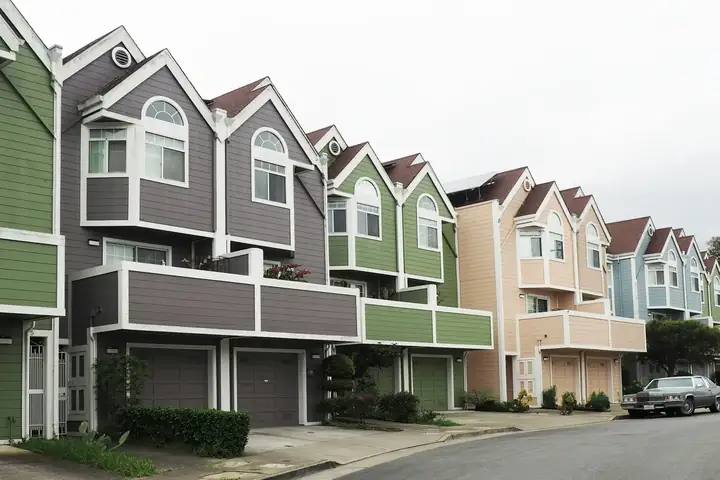
How Townhome Dryer Vents Are Laid Out
American Community Survey estimates for 2020–2024 put about 41 percent of housing units in ZIP 20166 in single-family attached buildings, the Census category that includes townhomes. Interior units have only front and back walls to vent through, so dryer vents often take longer routes.
| Route | Where lint collects | Who reaches it |
|---|---|---|
| Short run to a rear wall | Transition hose and the outdoor hood | Homeowner and technician |
| Horizontal run through floor framing | Elbows and low spots | Technician |
| Vertical run to a roof cap | The base of the rise and the roof cap | Technician with roof access |
Every elbow counts against the code's default 35-foot length limit. Runs that exceed it, and that the dryer maker's instructions don't cover, need rerouting or a listed power ventilator; see dryer vent repair.
Can You Clean a Dryer Vent Through the Roof?
Yes, with the right setup. A technician either works from the roof, pulling the cap and running a brush down, or works from the laundry side, pushing rotary brushes up the run while a vacuum draws lint out. Both finish at the roof cap, where lint and nests block the damper. Roof caps also attract birds; see bird nest and lint removal.
Don't climb a townhome roof yourself to clean a vent. Steep pitches and three-story heights make it a job for someone with fall protection.
Before Anyone Climbs: HOA and Roof Checks
- Read your HOA's rules on roof access and exterior work, and ask whether the community schedules group vent cleaning
- Find out whether the roof cap or exterior hood counts as your responsibility or the association's
- Renting? Tell the landlord or property manager before booking
- Ask the company about insurance and how it protects roofing materials
Condos, Apartments and Property Managers
Multi-unit buildings split one vent path into two responsibilities. The shared trunk that serves several units belongs to the association or the property manager. The short run inside each unit, from the dryer to the wall, belongs to the unit owner or, under the lease, the tenant. A cleaning needs both parts clear, so managers schedule whole-building visits and owners book their piece of the same day.
| Vent part | Who owns it | How it gets cleaned |
|---|---|---|
| In-unit run and transition duct | Unit owner or tenant under the lease | Individual booking, priced per vent |
| Shared trunk or roof cap | HOA board or property manager | Scheduled building visit with roof access |
| Between-tenant turnover | Owner or manager, before move-in | Unit cleaning plus an airflow check |
Managers in eastern Loudoun book turnovers the way they book painters: a list of units, one visit, one invoice. The Virginia rental guide covers the landlord and tenant split in detail.
How Often Long Townhome Vents Need Cleaning
No agency sets a fixed schedule. The Consumer Product Safety Commission advises cleaning the lint screen every load and the vent periodically. Long, vertical and multi-elbow runs hold more lint, so watch drying times closely and have them checked sooner than a short wall vent. The dryer vent cleaning page lists the warning signs.
Typical Costs for Townhome Vents and Ducts
| Job | Typical range |
|---|---|
| Dryer vent cleaning | $135–$360; roof access costs more |
| Townhome air duct cleaning | $190–$650 |