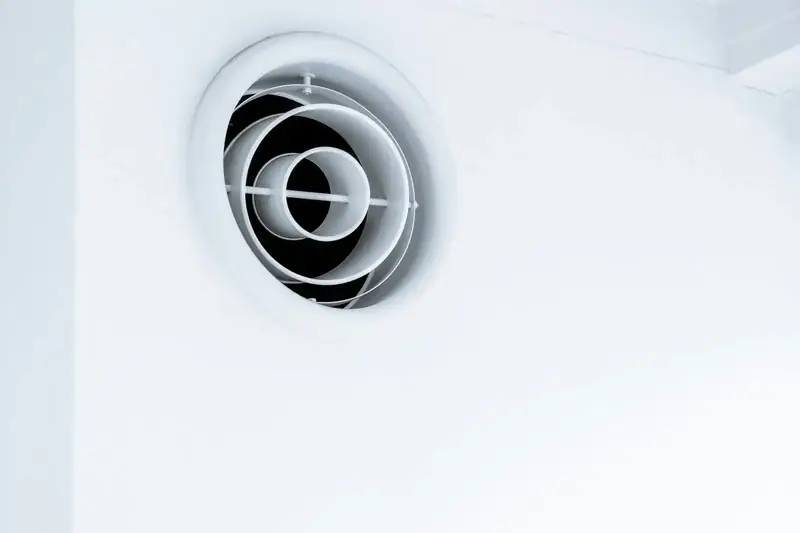
The Tissue Test for Bathroom Fan Airflow
Turn the fan on and hold a single square of toilet tissue against the grille. A fan moving real air pulls the tissue flat and holds it. If the tissue drops or barely flutters, the fan is dusty, the duct is blocked, or the outdoor damper is stuck.
Cleaning the Cover, Blades and Housing
Cut the Power
Turn the fan off at the switch, and at the breaker if the fan and wiring are exposed.
Drop the Cover
Most covers hang on two spring clips; pull down gently and squeeze the clips.
Wash the Cover
Warm soapy water loosens the damp dust. Dry it fully.
Vacuum the Blades and Housing
Use a brush attachment, and don't bend the blades.
Reinstall and Retest
Snap the cover back and repeat the tissue test.
Why a Bathroom Fan Fills With Dust So Fast
What Feeds It
- Lint from towels and bath mats
- Shower moisture that makes dust stick
- Hair spray and powder residue
What It Leads To
- Less airflow and a louder fan
- Moisture left on walls and ceilings
- Mildew spots near the ceiling; see mold remediation for growth in ducts
The EPA's mold guide advises keeping indoor humidity below 60 percent, ideally 30 to 50, and a working bath fan is one of the main tools for that.
Where the Fan Must Vent, and How Much Air It Moves
| Rule | Requirement | Section |
|---|---|---|
| Termination | Directly outdoors, not into the attic or crawl space | M1505.2 |
| Intermittent airflow | 50 cfm minimum | M1505.4.4 |
| Continuous airflow | 20 cfm minimum | M1505.4.4 |
Fans that dump moist air into the attic are a common find during attic work; the attic ductwork page explains why that matters.
When a Fan Needs More Than Cleaning
- The fan still fails the tissue test after cleaning; the duct or outdoor damper is likely blocked
- The motor hums, grinds or won't start
- The duct ends in the attic instead of outdoors
- The fan is too small for the room and never clears the steam
For a whole-house view of fans, hoods and fresh-air intakes, see whole-home ventilation cleaning.