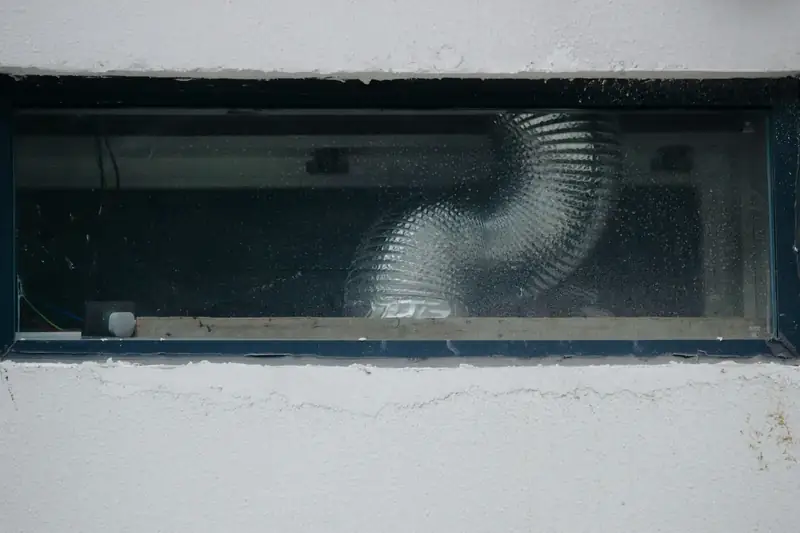
What a Camera Sees That a Flashlight Can't
A flashlight shows the register and the first foot or so of the boot behind it. Past the first elbow, the duct goes dark. That's where dust piles, joints separate and flex runs sag, and only a camera gets there.
| Tool | Reaches | Used by |
|---|---|---|
| Flashlight and mirror | Register face and the boot | Anyone |
| Phone camera or short borescope | The boot and the first bend | Anyone |
| Push camera on a long cable | Duct runs past elbows, trunk lines | Technician |
| Air handler access panels | Blower, coil face, drain pan | Technician, with power off |
A Register Check You Can Do in 10 Minutes
Switch the System Off
Set the thermostat to off so the fan doesn't pull dust around while the register is out.
Lift One Supply Register
Pick a floor or ceiling register in a room you use every day.
Look Into the Boot
A thin gray film is normal. Clumps, construction scraps, hair mats or wet spots are not.
Repeat at a Return Grille
Returns pull room air in, so they collect more than supply vents.
Found something odd? The duct and vent problem checker sorts symptoms by likely cause.
Findings and the Work That Usually Follows
| Finding | Points to | Next step |
|---|---|---|
| Heavy debris or hair mats in boots and returns | A dust reservoir inside the system | Source-removal duct cleaning |
| Disconnected or crushed flex duct | Air dumped into the attic or crawl space | Repair, then a leak test |
| Gaps at joints, dirt streaks on duct insulation | Air leaking through seams | Duct sealing |
| Fuzzy growth near the coil or drain pan | Possible mold | Lab confirmation, then remediation |
| Clean boots and trunk lines | No cleaning needed | Change the filter and recheck later |
Leaks rarely show on camera. ENERGY STAR estimates a typical house loses about 20 to 30 percent of the air moving through its ducts to leaks, holes and poor connections, and measuring that takes a pressure test, covered under duct leak detection.
What Camera Inspects Air Vents?
Technicians use a push camera: a small lighted camera head on a long, semi-rigid cable that feeds through registers and around elbows while a screen records the view. Short borescopes sold for home use reach the boot and the first bend, which is enough for a quick look.
- Lights on the camera head, since ducts are completely dark
- A cable long enough to pass the first elbow
- Recording, so you keep a copy of the footage
- A head small enough to slip past register dampers
Proof to Ask For Before You Pay
- Photos or video from inside the same ducts, before and after any work
- A plain-language list of findings, room by room
- For suspected mold, confirmation: the EPA says only an expert confirms mold, sometimes with lab analysis, and some labs test a tape sample for about $50
- A written quote that lists cleaning, repair and sealing as separate lines