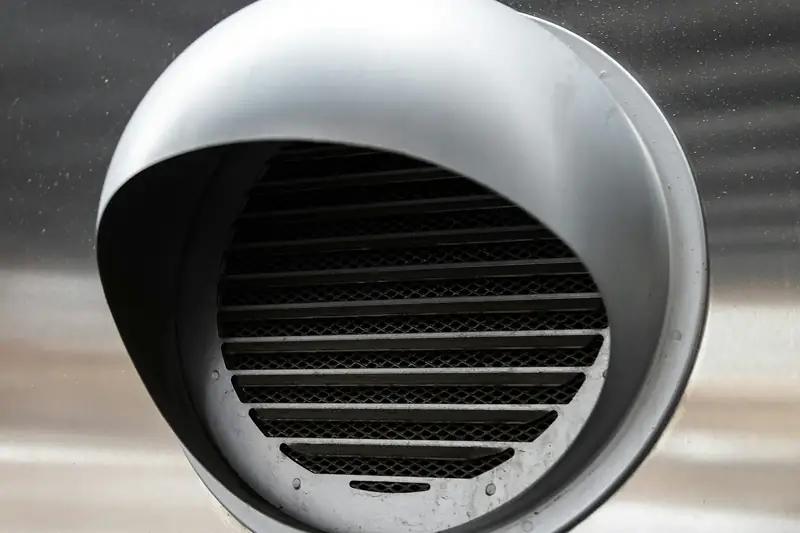
Mesh screen on your dryer hood? Virginia code doesn't allow one.

Dryer vent inspection · Northern Virginia

Dryer Vent Inspection: A Self-Check and a Code Checklist

You can spot most dryer vent trouble in fifteen minutes with a flashlight and a running dryer. A professional inspection adds the part you can't see: the run inside the walls, measured against the code.

Quick answer

Check a dryer vent by running the dryer and feeling for strong airflow at the outdoor hood, looking for a crushed or unlisted hose behind the machine, and confirming the hood's flap opens and has no screen. Virginia code requires 4-inch smooth metal duct, a 35-foot maximum length reduced by fittings, a backdraft damper and no screen at the termination.

  • 15 minFor a basic homeowner self-check
  • No screenAllowed on a dryer termination
  • 3 ftMinimum distance from openings into the building
Hooded exterior vent cap with a mesh screen over its opening on a house wall
A mesh screen like this one isn't allowed on a dryer exhaust termination. Stock photo by Steve Pancrate on Unsplash.

A 15-Minute Dryer Vent Self-Check

  1. Run the Dryer on High Heat

    Use an empty or light load for a few minutes.

  2. Go Outside to the Hood

    You should feel a strong, warm stream of air and see the flap open wide.

  3. Look for Lint and Screens

    Lint around the opening means a buildup inside. A mesh screen has to go.

  4. Check Behind the Dryer

    Look for a crushed hose, loose clamps or a hose without a UL 2158A label.

  5. Time a Normal Load

    If a load that used to take one cycle now takes two, the vent is restricted.

Dryer Vent Requirements Under Virginia Code

Inspection checklist based on 2021 Virginia Residential Code Section M1502
ItemPasses when
TerminationExhausts outdoors, with a backdraft damper
ScreenNone on the dryer termination
ClearanceAt least 3 feet from openings into the building
Exhaust duct4-inch smooth-wall metal
LengthWithin 35 feet after subtracting fitting allowances
Transition ductUL 2158A-listed, 8 feet or less, not concealed
Booster fansNone; listed power ventilators only

Why That Mesh Screen Has to Go

Screens look like a smart way to keep birds out, and they work well on some other vents. On a dryer they catch lint, clog, and block the exhaust. That's why the code bans screens at dryer terminations. A hood with a working backdraft damper keeps pests out instead; bird nest and lint removal covers what to do if something already moved in.

What a Professional Inspection Adds

  • A camera run through the hidden vent line inside walls, floors and ceilings
  • The vent's measured length and fittings against the 35-foot limit
  • An airflow reading at the termination
  • A list of fixes: cleaning, repair or both

Do Home Inspectors Check Dryer Vents?

Many home inspectors note the visible parts, like the hose behind the dryer and the outdoor hood. A general home inspection doesn't run a camera through the hidden line or clean it. Buying a home? Ask the inspector what the report covers, and schedule a dedicated dryer vent inspection if the vent runs long or exits through the roof.

Dryer Vent Inspection FAQs

How do I check my dryer vent?

Run the dryer on high heat and go outside: you should feel strong, warm airflow and see the flap open wide. Look for lint around the hood, a mesh screen, or a crushed or unlabeled hose behind the dryer. A load that now needs two cycles points to a restricted vent.

How often should a dryer vent be inspected?

No federal agency sets a fixed interval. The Consumer Product Safety Commission advises cleaning the lint screen before or after every load and cleaning the vent and exhaust duct periodically. Check yours whenever drying slows, and inspect long or roof vents more often.

What are the requirements for a dryer vent?

Under Section M1502 of the 2021 Virginia Residential Code, a dryer vent uses 4-inch smooth metal duct within 35 feet after fitting allowances, a UL 2158A-listed transition duct up to 8 feet that isn't concealed, and an outdoor termination with a backdraft damper, no screen and 3 feet of clearance from openings.

Do home inspectors check dryer vents?

Many home inspectors look at the visible parts: the transition hose and the outdoor hood. They don't usually run a camera through hidden vent lines or clean them. Ask what the report covers, and book a dedicated dryer vent inspection for long or roof-mounted vents.

Know Your Vent Passes

An inspection checks airflow, length and every code point, not just the lint.

Call (703) 952-9479 Back to top