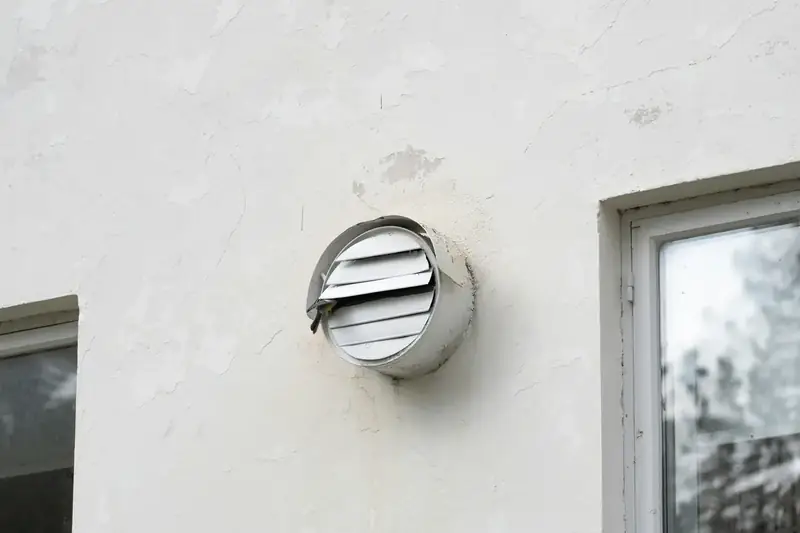
Three Exhaust Systems, Three Different Risks
| System | Main risk | Warning signs |
|---|---|---|
| Clothes dryer | Fire from lint buildup; wasted energy | Long drying times, hot laundry room, flap barely opens, burning smell |
| Kitchen range hood | Grease buildup; smoke and moisture left indoors | Weak suction, grease drips, fan noise, lingering cooking smells |
| Bathroom exhaust fan | Moisture and mold | Mirror stays fogged, peeling paint, musty smell, dusty grille |
Dryer Vents: The Fire-Safety Job
The U.S. Fire Administration reports that failure to clean was the leading factor contributing to home clothes dryer fires from 2018 to 2020, at 31 percent. The Consumer Product Safety Commission's advice is simple: clean the lint screen before or after every load, never run the dryer without it, and clean the vent and exhaust duct periodically so the outdoor flap opens freely.
The lint screen can't catch everything. Lint that slips past settles in elbows and long horizontal runs, which is why townhome laundry rooms on upper floors need attention most often. The dryer vent cleaning page walks through a full professional cleaning.
What Virginia's Residential Code Requires
| Rule | Applies to |
|---|---|
| Discharge to the outdoors | Dryer, kitchen hood (listed ductless hoods excepted), bathroom |
| Keep the duct independent of other exhaust systems | Dryer, kitchen hood |
| Never discharge into an attic, crawl space or inside the building | Kitchen and bathroom exhaust |
| Smooth-interior metal duct, 4-inch diameter | Dryer |
| 35-foot maximum length, reduced for each elbow | Dryer, unless the manufacturer allows longer |
| Backdraft damper at the outside cap; no screens | Dryer |
| No booster fans in the duct | Dryer |
| Smooth, airtight duct with a backdraft damper | Kitchen hood |
Source: 2021 Virginia Residential Code, Sections M1502, M1503 and M1505 (via UpCodes). Local amendments and your appliance's installation manual also apply.
Why Screens Don't Belong on Dryer Vents
It's tempting to screen a dryer vent to keep birds out. The code forbids it, because lint catches on the mesh and blocks the exhaust. A working backdraft damper keeps most animals out while letting lint pass. If birds have already moved in, the nest and the lint behind it need to come out before the dryer runs again — see bird nest and lint removal.
Townhomes and HOA Communities
Townhomes make up a large share of housing around Dulles, and many put the dryer on an upper floor with the exhaust running to the roof or a high side wall. Those runs are longer, harder to reach and often subject to HOA rules about roof access and exterior caps. The townhome and HOA vent guide covers what to ask before booking.