Water dripping from a ceiling vent? Turn the system off and check for wet insulation.

Blog · Problem guide

Why Your Air Ducts Sweat in Summer, and How to Stop It

Ducts sweat for the same reason a cold glass does on a humid day. Air conditioning cools the metal, and when warm, damp air touches it, water condenses on the outside. In Northern Virginia summers that happens most in attics, crawl spaces and unfinished basements, and left alone it soaks insulation and feeds mold.

Quick answer

Air ducts sweat when humid air touches duct metal cooled by the air conditioning below the air's dew point. The fixes are insulating the ducts, sealing leaks, and lowering humidity. The residential code requires attic supply and return ducts 3 inches and larger to carry at least R-8 insulation. Wet or moldy duct insulation can't be cleaned effectively and needs replacement, according to the EPA.

Get a written estimate for your home or call (703) 952-9479.

  • R-8Minimum insulation, attic ducts 3 in. and up
  • 30–50%EPA's recommended indoor humidity
  • ReplaceWet or moldy duct insulation, per the EPA
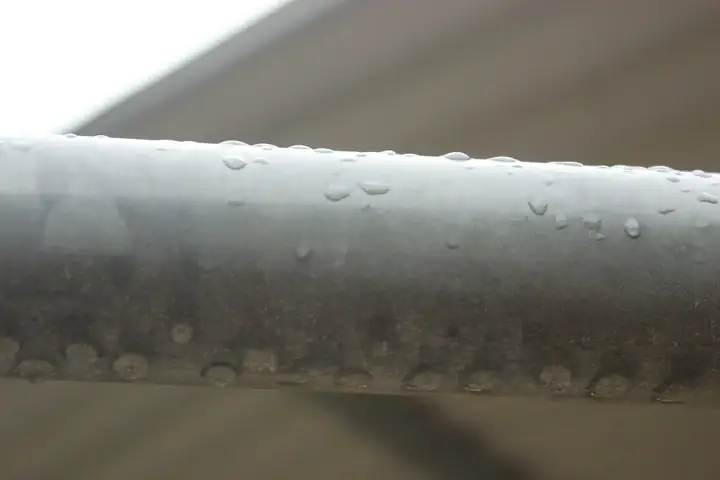
Water droplets beaded along a gray metal pipe outdoors
Condensation forms when humid air meets metal colder than its dew point. Stock photo by Zoe Denney-Goodyer on Unsplash.

Why Ducts Sweat

Every parcel of air has a dew point, the temperature at which its moisture turns to liquid. Supply ducts carrying air-conditioned air are cold. When warm, humid air around them cools below its dew point on contact, water forms on the duct. Three things make it worse: missing or thin insulation, leaks that let cold air chill the surrounding space, and high humidity around the duct.

Where Ducts Sweat Most

Locations and the usual cause
LocationWhy it sweatsFirst fix
AtticHot, humid air around cold supply ductsInsulate and seal the runs
Crawl spaceDamp ground raises humidity under the houseControl moisture, then insulate
Unfinished basementSummer humidity meets bare metalDehumidify and insulate
Ceiling registerCold register in a humid roomSeal the boot, check humidity

The attic ductwork page and the crawl space ductwork page cover each location in more detail.

Fixes That Last

  1. Seal the Leaks

    ENERGY STAR recommends mastic sealant or metal tape on duct joints, never cloth duct tape. Typical ducts lose 20 to 30 percent of their air to leaks.

  2. Insulate to Code

    The residential code requires at least R-8 on attic supply and return ducts 3 inches and larger, and R-6 on those ducts in other unconditioned parts of the house.

  3. Bring Humidity Down

    The EPA recommends 30 to 50 percent indoors and staying under 60 percent. A dehumidifier helps in basements and crawl spaces.

  4. Check the Airflow

    A dirty filter or coil slows air across the coil and can make supply air colder than it should be.

The duct sealing page covers materials and which joints to seal first.

When the Insulation Is Already Wet

The EPA says duct insulation that gets wet or moldy can't be cleaned effectively and should be replaced. Wet insulation also stops insulating, which makes the sweating worse. A musty smell at the registers is often the first sign; the musty smell guide covers what to check.

Sweating Air Duct FAQs

How do you stop condensation on ductwork?

Seal the duct joints with mastic or metal tape, insulate ducts in attics, crawl spaces and basements, and keep indoor humidity between 30 and 50 percent. The residential code requires at least R-8 insulation on attic supply and return ducts 3 inches and larger.

Why is my AC unit sweating inside the ducts?

Cold air from the air conditioner cools the duct metal below the dew point of the humid air around it, so water condenses. Missing insulation, leaks and high humidity make it worse. Check for wet insulation, which the EPA says needs replacing.

Should condensation be coming out of AC vents?

No. Water at a register usually means humid room air is condensing on a cold register or boot, or the boot is uninsulated. Turn the system off if water is dripping, check the drain pan, and have the boot and nearby ducts inspected.

Is condensation on air ducts a problem?

Yes, if it keeps happening. Water soaks the insulation, drips onto ceilings and feeds mold. Wet or moldy duct insulation can't be cleaned effectively and has to be replaced, according to the EPA.

Stop the Water at the Source

Sealed, insulated ducts stop sweating before the insulation soaks.

Call (703) 952-9479 Back to top